
Nothing beats a bowl of fresh, vibrant spring vegetable pasta when the weather warms up. It’s the ultimate way to celebrate seasonal produce while still indulging in that carb-loaded comfort we all crave. Plus, it’s stupidly easy to make—no fancy skills required, just good ingredients and a little enthusiasm.
Why Spring Vegetables Are the Real MVPs
Spring veggies bring colors, textures, and flavors that winter root vegetables simply can’t compete with. Think crisp asparagus, sweet peas, tender baby spinach, and radishes with just the right amount of bite. They’re lighter, brighter, and basically beg to be tossed with pasta.
Pro tip: Farmers’ markets are your best friend here. Spring produce is at its peak, and local options will always taste 10x better than grocery store versions that’ve been sitting in transit for weeks.
The Pasta Choices That Actually Matter
Not all pastas are created equal, especially when you’re loading them up with delicate spring veggies. You want shapes that can hold onto sauces and ingredients without overwhelming them. Here are my top picks:
- Fettuccine or tagliatelle: Wide, flat noodles = perfect for creamy or light olive oil-based sauces.
- Farfalle (bow-tie): Those little crevices trap peas and tiny veggie bits like a dream.
- Orecchiette: The “little ears” are basically edible spoons for chunky sauces.
- Penne or rigatoni: If you’re roasting veggies, these tubes hold up well.
Whole Wheat vs. Regular: Does It Matter?
IMO, not really—unless you’re dead-set on extra fiber. The star of the show here is the veggies, so pick whatever pasta makes you happy. That said, a good bronze-die-extruded pasta (fancy talk for “rough texture”) will hold sauce better.
The Ultimate Spring Veggie Lineup
You can’t go wrong with any of these, but mix and match based on what’s fresh:
- Asparagus: Roast it, sauté it, or shave it raw for a crunchy bite.
- Peas: Fresh > frozen, but frozen is still a solid backup.
- Radishes: Thinly sliced for peppery crunch or roasted to mellow out.
- Baby spinach or arugula: Toss in at the last second for a fresh, leafy kick.
- Artichokes: Pre-steamed or jarred (because who has time for fresh?).
- Fava beans: High effort, high reward—double-podding required, but worth it.
Sauces That Won’t Overpower Your Veggies
Heavy marinara or Alfredo? Hard pass. Spring pasta deserves something light and bright:
- Lemon-garlic olive oil: Zesty, simple, and lets the veggies shine.
- Pesto (classic or pea-based): Blends right in with green veggies.
- Brown butter + herbs: Nutty, rich, but still fresh with thyme or parsley.
- White wine cream sauce: Lighter than Alfredo but still indulgent.
The Cheese Factor
Don’t drown your dish in Parmesan—use it as a finisher. Pecorino Romano, ricotta salata, or even goat cheese work wonders here.
15-Minute Spring Pasta: A Lazy Cook’s Dream
For when you want maximum flavor with minimal effort:
- Boil pasta (salt the water like the sea).
- Sauté garlic in olive oil, then toss in sliced asparagus and peas for 2-3 minutes.
- Reserve a cup of pasta water, then drain and add pasta to the pan.
- Drizzle with lemon juice, toss in a handful of arugula, and add pasta water as needed.
- Finish with black pepper and Parmesan. Boom.
FAQ: Your Spring Pasta Questions, Answered
Can I use frozen vegetables?
Absolutely! Frozen peas, spinach, and even asparagus work in a pinch. Just thaw and pat dry to avoid a watery sauce.
How do I keep the pasta from getting mushy?
Undercook it by 1 minute, then finish in the pan with your sauce and veggies. The pasta soaks up flavors without turning to glue.
What protein can I add?
Grilled shrimp, crispy pancetta, or a fried egg turn this into a full meal. But it’s plenty satisfying without.
Can I make this vegan?
Easy. Skip the cheese, use nutritional yeast for umami, and stick to olive oil or pesto (no cream).
How long do leftovers last?
2-3 days max—spring veggies lose their crunch fast. Reheat gently with a splash of water to revive the sauce.
Go Forth and Carb Load
Spring vegetable pasta is the edible equivalent of throwing open the windows after a long winter. It’s fresh, fast, and flexible—no strict recipes needed. Just grab what looks good, cook with reckless abandon, and enjoy the season. Now, who’s ready for seconds?
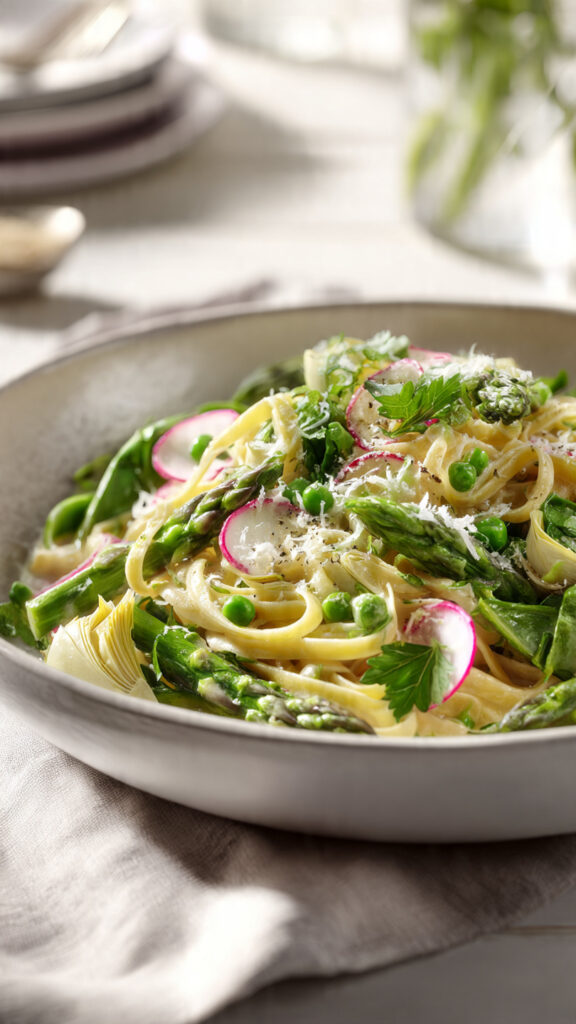

Spring Vegetable Pasta You’Ll Crave All Season
Description
Ingredients
Instructions
-
Cook pasta in well-salted water until al dente. Reserve 1 cup of pasta water.
-
Heat olive oil in a large pan, add garlic, cook 30 seconds.
-
Add asparagus and peas, sauté 2–3 minutes until just tender.
-
Add artichokes and radishes, toss briefly.
-
Transfer cooked pasta to the pan with a splash of pasta water.
-
Add lemon juice, zest, and spinach; toss until greens wilt.
-
Season with salt and pepper, finish with grated cheese.